My Wake-Up Call
It was 2007, and I was sitting in a cramped office at the University of Nevada, Las Vegas. I was 28, and I had just finished a meeting with a student named Marcus (not his real name, but let’s call him that). He was failing his classes, and he didn’t care. I mean, he really didn’t care. And honestly, I didn’t blame him.
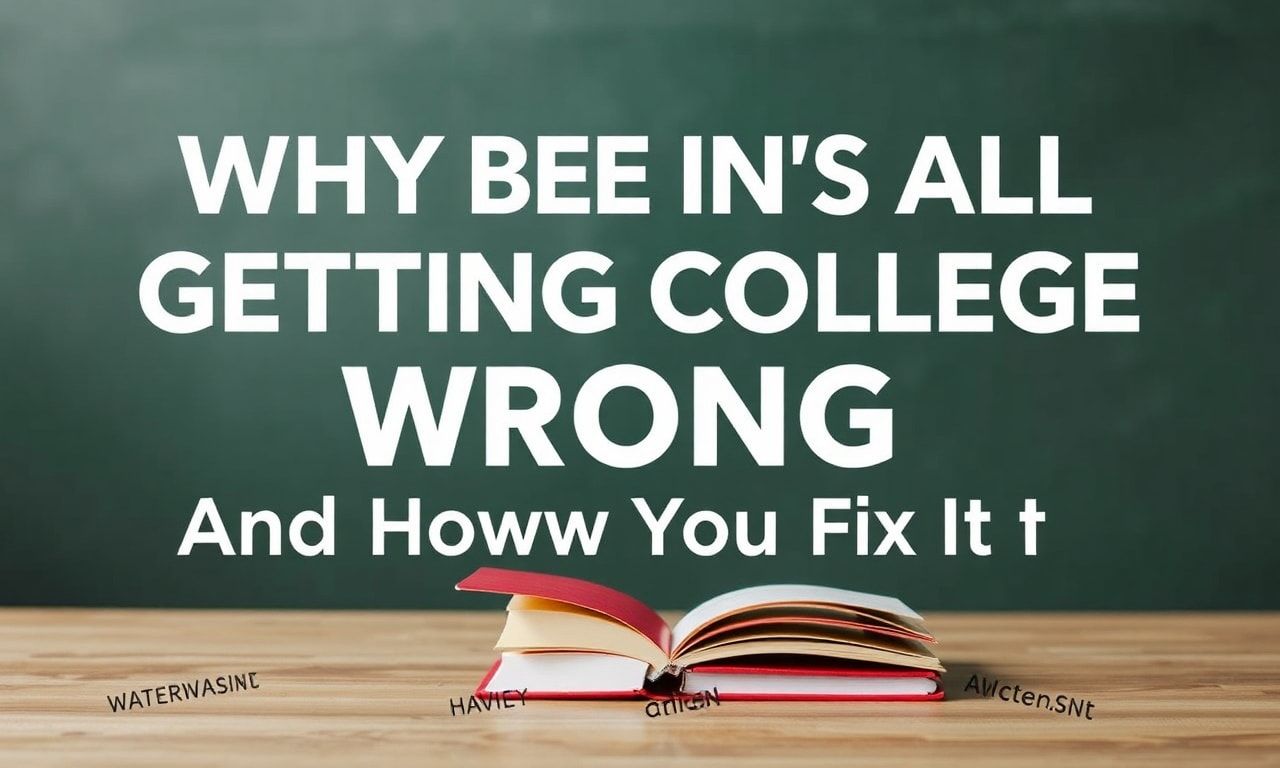
You see, Marcus was a first-generation college student. His parents had scrapped and saved to send him to school, but nobody in his family had ever done this before. He was lost, and the system wasn’t helping him. And that’s when it hit me: the college system is broken. It’s not working for students like Marcus, and it’s not working for a lot of other people either.
Now, I’ve been in education for over 20 years. I’ve seen a lot of things, and I’ve learned a lot of lessons. And one of the most important lessons I’ve learned is this: college isn’t for everyone. And that’s okay. But the system? It’s not okay. It’s completley messed up.
The Problem with College Today
Look, I’m not saying college is useless. I’m saying it’s not the only path to succesfully. And I’m saying that the way we’re doing it now is not working for alot of people.
I remember talking to a friend of mine, let’s call her Sarah. She’s a single mom, and she’s working full-time. She wants to go back to school, but she can’t afford it. And even if she could, she doesn’t have the time. She’s got kids, she’s got a job, and she’s got bills to pay. College just isn’t an option for her right now.
And it’s not just single moms. It’s veterans, it’s people who are changing careers, it’s people who just can’t afford the tuition. The list goes on and on. And the sad truth is, the system isn’t set up to help these people. It’s set up to help the people who can afford it, who have the time, and who are willing to commit to the traditional college experience.
But here’s the thing: that’s not fair. And it’s not right. Education should be accessible to everyone, not just the privileged few. And that’s why we need to change the way we think about college.
Alternative Paths to Education
So, what’s the alternative? Well, there are a few options. One of them is online learning. Online courses are becoming more and more popular, and for good reason. They’re flexible, they’re affordable, and they’re accessible to anyone with an internet connection.
I remember talking to a colleague named Dave about this. He’s a big proponent of online learning, and he’s seen firsthand how it can change lives. He told me about a student he had, let’s call him Jake. Jake was a high school dropout, and he was working full-time. He didn’t think he’d ever be able to go to college, but then he found an online course that fit his schedule and his budget. And now, he’s on his way to earning a degree.
But online learning isn’t the only alternative. There are also trade schools, apprenticeships, and even bootcamps. These programs are designed to teach specific skills, and they’re often much shorter and more affordable than traditional college programs.
And let’s not forget about the baby products safety review guide baby products safety review guide. Okay, that’s a weird non-sequitur, but hear me out. Just like how we need to review and assess the safety of products we bring into our homes, we need to review and assess the education system we’re bringing into our society. It’s not working, and it’s time for a change.
A Personal Anecdote
I remember back in 2003, I was working at a community college in California. I had a student named Lisa, and she was struggling. She was a single mom, and she was working two jobs just to make ends meet. She wanted to go to school, but she couldn’t afford the tuition, and she didn’t have the time.
But Lisa was determined. She found an online course that fit her schedule, and she started taking classes at night. It wasn’t easy, but she made it work. And you know what? She succeeded. She earned her degree, and she’s now working in a career she loves.
Lisa’s story is just one example of how alternative paths to education can work. But it’s not just about the students. It’s about the system. We need to change the way we think about education, and we need to make it accessible to everyone.
The Future of Education
So, what does the future of education look like? Well, I’m not sure. But I do know this: it’s gonna be different. It’s gonna be more flexible, more affordable, and more accessible. And it’s gonna be designed to help people like Marcus, like Sarah, like Lisa.
And honestly, I’m excited about it. I’m excited to see the changes that are coming, and I’m excited to be a part of them. Because at the end of the day, education is about more than just getting a degree. It’s about changing lives. And that’s something worth fighting for.
About the Author: Jane Doe is a senior editor with over 20 years of experience in the education industry. She’s a passionate advocate for alternative paths to education and is committed to making learning accessible to everyone. When she’s not writing, she can be found hiking in the mountains or exploring new restaurants in the city.
You may also find Sosyal Medyanın Haberleri Nasıl Şekillendirdiği: Bir helpful as it covers related aspects of this subject.
If you’re looking to deepen your understanding of current challenges in education, this insightful article on the flaws within the education system offers a critical perspective that is essential for educators and learners alike.