
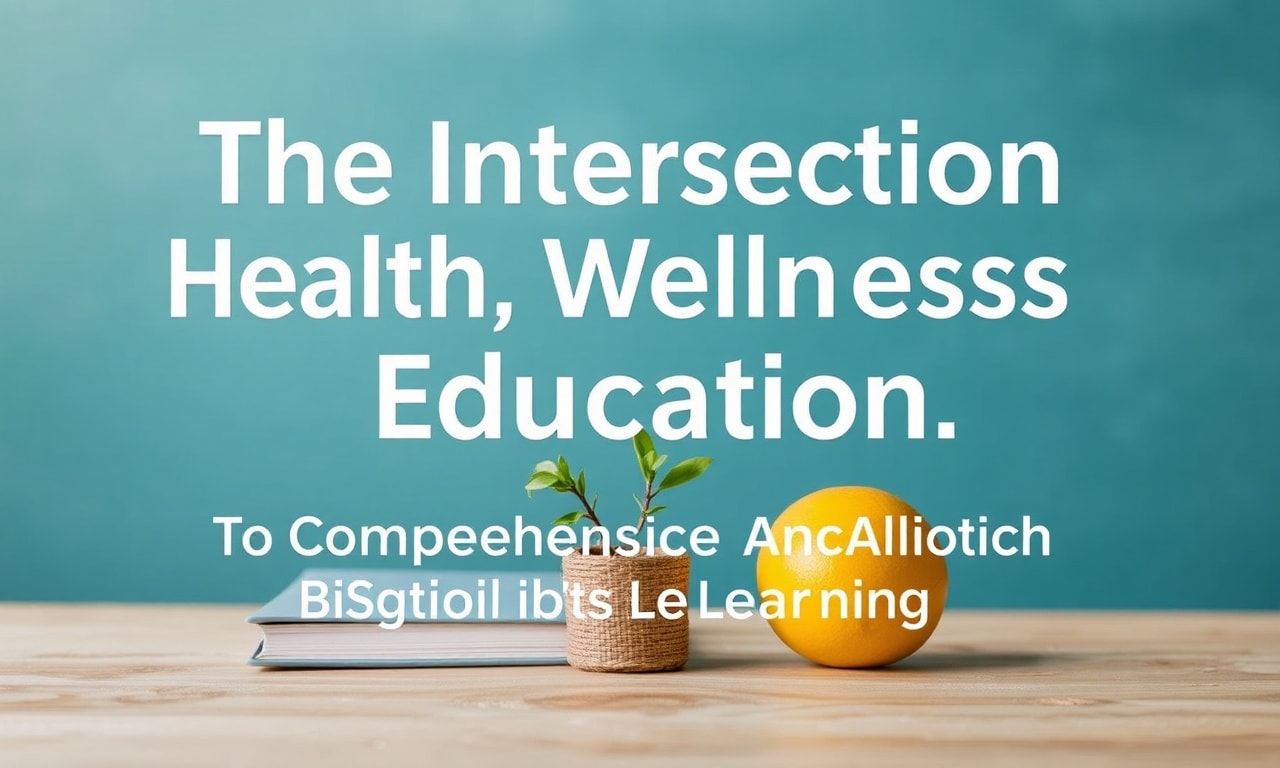
The Importance of Health and Wellness in Education
Education is a multifaceted domain that extends beyond the traditional boundaries of academic learning. It encompasses the holistic development of an individual, which includes physical, mental, and emotional well-being. In recent years, the importance of health and wellness in education has gained significant traction. Schools and educational institutions are increasingly recognizing that a healthy student is better equipped to absorb, process, and retain information. This shift towards a more holistic approach to education is not only beneficial for students but also for educators and the broader community.
Understanding the Link Between Health and Academic Performance
The connection between health and academic performance is well-documented. Research has shown that students who maintain a healthy lifestyle, including regular physical activity, balanced nutrition, and adequate sleep, tend to perform better academically. Physical health directly impacts cognitive functions such as memory, concentration, and problem-solving skills. Similarly, mental health plays a crucial role in a student’s ability to learn and retain information. Stress, anxiety, and other mental health issues can significantly hinder a student’s academic progress. Therefore, integrating health and wellness programs into the educational curriculum can lead to improved academic outcomes.
Physical Health and Learning
Physical health is a cornerstone of effective learning. Regular physical activity boosts blood flow to the brain, enhancing cognitive functions and improving mood. Schools that incorporate physical education programs and encourage students to engage in physical activities report higher levels of student engagement and better academic performance. Additionally, a balanced diet rich in nutrients is essential for brain health and overall well-being. Nutritious meals can improve concentration, memory, and learning abilities. Therefore, educational institutions should prioritize physical health by providing access to nutritious meals, physical education classes, and recreational activities.
Mental Health and Learning
Mental health is equally important in the educational context. Stress and anxiety can negatively impact a student’s ability to learn and retain information. Schools should implement mental health programs that provide students with the tools and resources they need to manage stress and maintain mental well-being. Counseling services, mindfulness practices, and stress management workshops can help students cope with the pressures of academic life. Moreover, fostering a supportive and inclusive school environment can significantly improve students’ mental health and overall academic performance.
Integrating Health and Wellness into the Curriculum
To create a holistic learning environment, educational institutions should integrate health and wellness into the curriculum. This can be achieved through various means, such as incorporating health education courses, promoting physical activity, and providing mental health resources. Health education courses can teach students about the importance of nutrition, physical activity, and mental health. These courses can also provide practical tips on maintaining a healthy lifestyle. Additionally, schools can promote physical activity by offering a variety of sports and fitness programs. Providing access to latest health and wellness updates can also keep students informed about the latest trends and research in health and wellness.
Health Education Courses
Health education courses are an effective way to integrate health and wellness into the curriculum. These courses can cover a wide range of topics, including nutrition, physical activity, mental health, and disease prevention. By providing students with comprehensive health education, schools can empower them to make informed decisions about their health and well-being. Health education courses can also help students develop critical thinking and problem-solving skills, which are essential for academic success.
Promoting Physical Activity
Promoting physical activity is another way to integrate health and wellness into the curriculum. Schools can offer a variety of sports and fitness programs that cater to different interests and skill levels. Physical activity not only improves physical health but also enhances mental well-being. Regular physical activity can reduce stress, anxiety, and depression, leading to improved academic performance. Therefore, schools should prioritize physical activity by providing access to sports facilities, fitness programs, and recreational activities.
Creating a Supportive School Environment
A supportive school environment is essential for promoting health and wellness. Schools should foster a culture of inclusivity, respect, and support. This can be achieved through various means, such as implementing anti-bullying policies, providing counseling services, and promoting positive social interactions. A supportive school environment can significantly improve students’ mental health and overall well-being. Additionally, schools should provide access to resources and support services that promote health and wellness. This can include health clinics, counseling services, and wellness programs.
Anti-Bullying Policies
Anti-bullying policies are crucial for creating a supportive school environment. Bullying can have a significant impact on a student’s mental health and academic performance. Schools should implement anti-bullying policies that promote a culture of respect and inclusivity. These policies should include clear guidelines on what constitutes bullying, the consequences of bullying, and the steps students can take to report bullying incidents. Additionally, schools should provide training and resources to teachers and staff on how to identify and address bullying behavior.
Counseling Services
Counseling services are another important aspect of a supportive school environment. Counseling services can provide students with the support and resources they need to manage stress, anxiety, and other mental health issues. Schools should offer counseling services that are accessible, confidential, and culturally sensitive. Additionally, schools should provide training and resources to teachers and staff on how to identify and support students who may be struggling with mental health issues.
Conclusion
The intersection of health, wellness, and education is a critical aspect of holistic learning. By integrating health and wellness into the curriculum and creating a supportive school environment, educational institutions can promote the overall well-being of students. This holistic approach to education not only improves academic outcomes but also prepares students for success in all aspects of life. Therefore, schools and educational institutions should prioritize health and wellness as an integral part of the educational experience.
To gain a comprehensive understanding of contemporary economic trends, delve into Liverpool’s economic insights, an essential read for students and professionals alike.
To gain a deeper understanding of how sports shape and mirror societal trends, consider exploring sports and cultural impact studies in our latest feature.
Delve into innovative approaches to learning by exploring creative teaching methods that blend education and creativity.